
As a Cub Scout Leader and a keen Darwin Amateur Radio club member I had been looking forward to setting up activities for this year’s Jamboree on the Air; a Jamboree being a large gathering of scouts or
guides.
I have been involved in a few JOTA/JOTI’s over the past years and apart from some ARDF or fox hunting the amateur radio communications element has been missing. Every two years the organisation of the event is run by Scout Headquarters and this year the focus was heavily on the Internet part, so I organised an overnight camp at Woorabinda Youth Camp at Howard Springs for our Humpty
Doo group and Nigel Hayward, VK8FNAH, organised activities to run at Alawa Scout Hall for the Alawa group.
I saw this as an opportunity to build experience and obtain equipment for myself and show our youth members another side of communications that does not need an internet connection. I researched and found suppliers of receivers designed purely for ARDF (VK3YNG) and transmitters (byonics.com), and had recently purchased a XIEGUG90 20W HF transceiver. Add a 2M transceiver in for good measure and it looked like a simple and usable setup.
However, about a week and bit before the day, I received a call from a fellow club member asking how my preparations were going and offering to loan me a complete 100W HF transceiver and anything else that might be needed to make a success of the day. It was Spud Murphy VK8ZWM who made this generous offer and over the next week he was in contact with both myself and Nigel to offer advice, construct fan dipoles for 40,30,20M and loan any other equipment that he was able to. It was certainly a relief and a learning experience to have Spud’s assistance in
many forms for the event.
At Woorabinda I setup early on Saturday, 2M antenna on a tall pole clamped to existing infrastructure and HF dipole raised utilising a convenient tree. I quickly learned about using new rope as on raising the centre of the dipole it would spin many times and wrap the elements around the feedline as I approached full height, in the end I had to tie of the end of the elements and raise the centre until tight, ease off the ends then hoist again to prevent it wrapping itself up. I did try a small swivel but it would not turn as easily as the elements would wrap around.
So the communications post was set up and awaiting calls. There are suggested calling frequencies for International and Australian contacts and I chose to initially monitor 40M. Of course this was a scout overnight camp, so I had to ensure all the names were ticked off, tents set up and scouts happily doing something. Besides eating, the scouts love hands on activities and I had spent many weeks also
researching the making of water rockets utilising soft drink bottles which are charged with water and compressed air to over 100 psi before launching. So whilst monitoring the radios, we had rocket construction and launching occurring.
Throw in a search mission to find a Koala (Kmart $9) by ARDF utilising a VHF beacon, tape measure Yagi and receiver and the day progressed quickly.
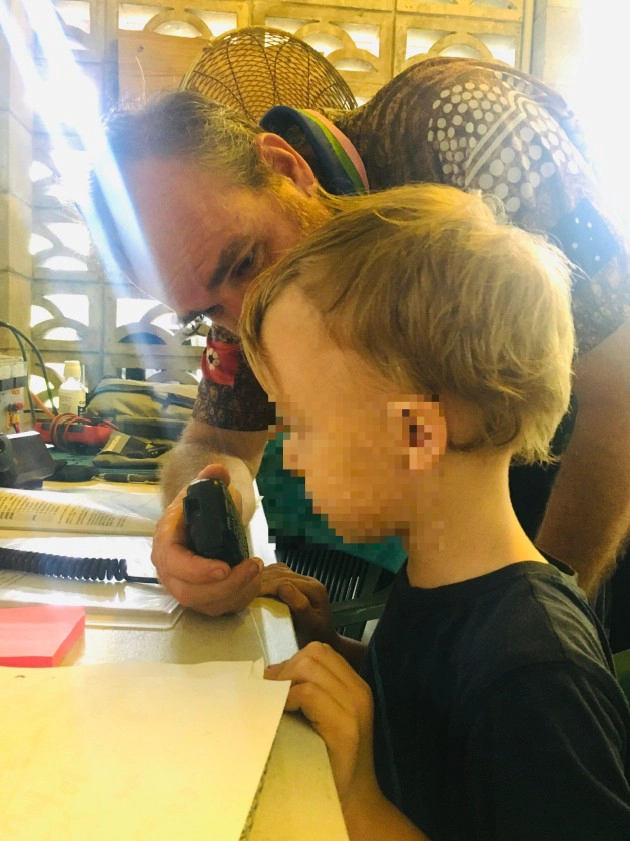
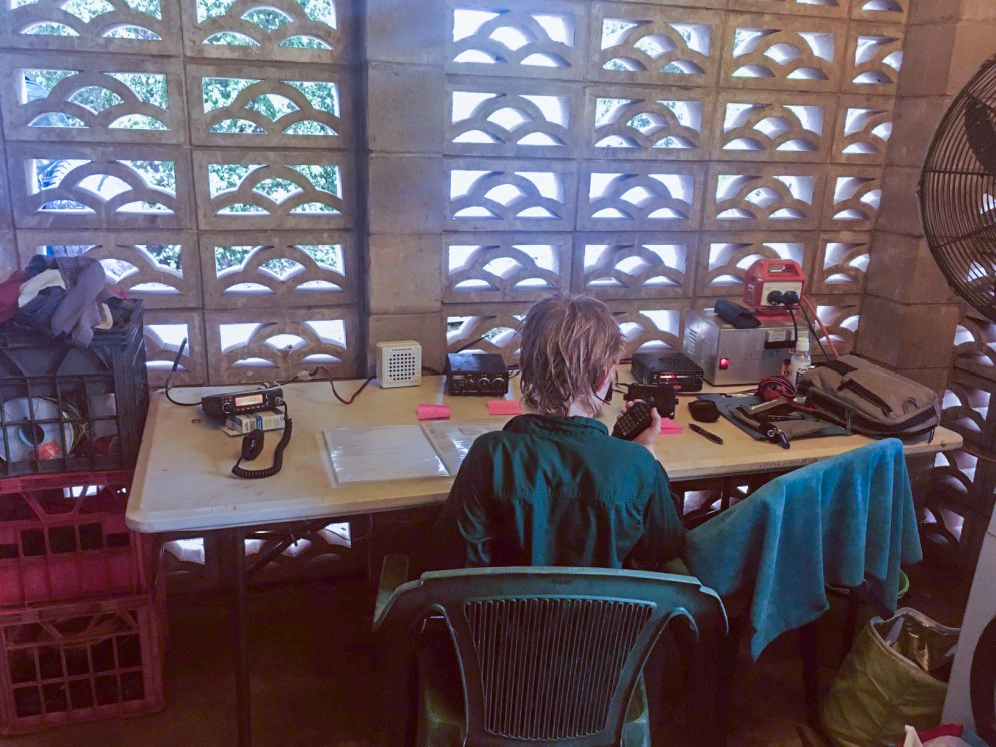
When Alawa scout group came up we had communications between ourselves on 2M and 20M, but still no interstate calls. I was hoping this would improve in the evening. With the careful coaching and patience of Spud operating Alawa many scouts communicated with each other over the HF between Alawa and Howard Springs. Some were shy, some took to the microphone like old hands and a few couldn’t bring themselves to try this time but still experienced the event.
Later in the evening, propagation improved and whilst I could hear some VK1 and VK2 scouts the traffic from just north was overwhelming the bands making it very difficult and no further contacts were made.
There are many Australian and International websites dedicated to this activity and I had used vkjotijota.com for most of my information; however, it was a steep learning curve on registering groups, location and other requirements that I think I will need another attempt next year to get it all sorted. There was quite a lot of mention of using DMR, Echolink and IRLP by other Australian groups, but I have yet to learn firsthand about these myself so I could not offer these this year but hope to by next time.
So, was it a success? On a personal level I learned a lot through using Spud’s radio, Kenwood tuner and constructing the fan dipole with him and I enjoyed the friendship and support offered by Spud and other club members. For the scouts, although the attendance was in the low numbers and radio had to compete with water rockets it was still worthwhile to expose them to something new. I have learned in my short time as a leader that I can never know beforehand which scout is going to be totally taken with an activity and wanting to do more, but it’s obvious when they do.
I would like to thank Spud Murphy for extending his hand of friendship and assistance to our JOTA event, both Nigel and myself admit it would not have been so well done without him.